A lead is a lead until they say no
Most leads get dropped after two messages. Three people came back to me this autumn after up to a year of quiet. Why you shouldn't give up on yours.

In the last few weeks, three people have come back to me out of nowhere.
One was a woman in China who wrote to thank me for a message I'd sent her a year earlier. Another opened with "you messaged me a year ago, I need your help." The third had been quiet for months and months, and came back asking how we could work together.
None of them were ready when I first reached out. All three were ready later. And the only reason they found me again is that I was still there, still in their messages, still the person who'd checked in.
The usual advice on how many times to follow up runs the other way. Two follow-ups, maybe three, then move on to someone warmer. It sounds efficient, and it's where most of the money goes missing.
What no reply actually means
When someone doesn't answer, it almost never means no. It means not this week. They were travelling, or hiring, or the budget conversation hadn't happened yet, or your message landed on a Monday that was already on fire.
A real no is easy to spot because people say it. "We're all set." "Not for us." That's a clear answer, and I respect it. I stop there.
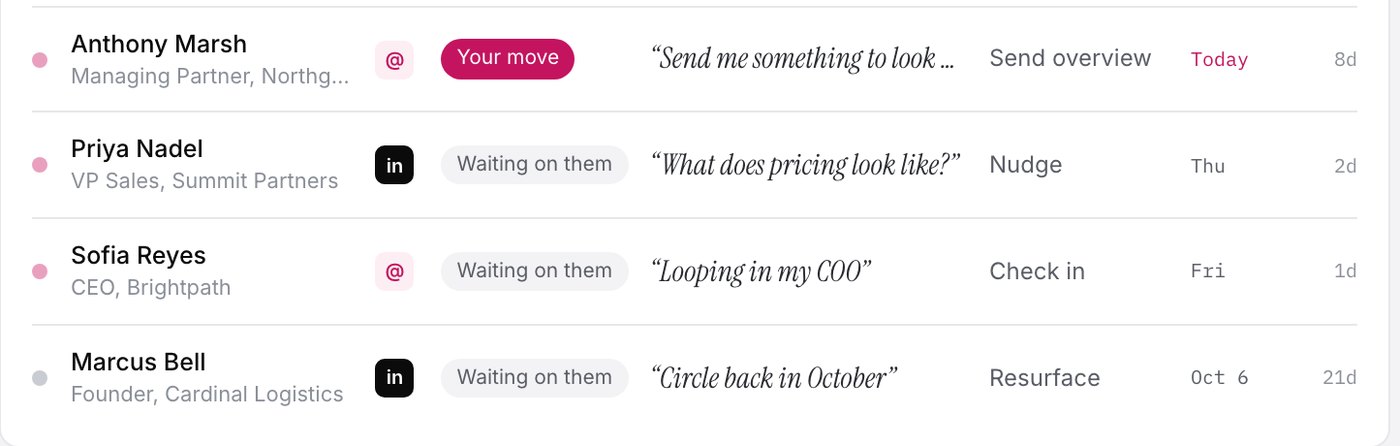
Everyone else is still a lead. They just haven't told me when yet. And when someone says "not now," that gets a date. Check back after the new year means the second week of January goes on the calendar. Keeping track of all those dates is its own job, and remembering is what keeps a lead alive.
Questions people ask
How many times should you follow up with a lead?
Until they give you an answer. There's no magic number. What matters is that every message is worth reading, so skip the "just checking in" ones and space them further apart as time goes on.
When should you stop following up?
When they say no. "We're all set" or "not for us" is a clear answer, and that's where it ends. Silence isn't an answer.
What does it mean when a prospect doesn't reply?
Usually, not this week. They were busy, travelling, or it wasn't a priority yet. It almost never means no.
Keeping conversations going is what I do for clients. If you've got a pile of people you meant to get back to, book a call with me.